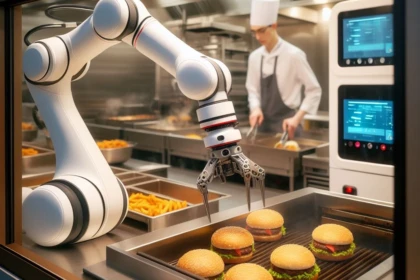
Imagine walking into a fast food restaurant and being greeted by a robot that takes your order, prepares your meal, and even handles the payment process. This may sound like a scene from a science fiction movie, but it’s becoming a reality thanks to the advancements in fast food ai technology. The integration of artificial intelligence in the fast food industry is revolutionizing the way restaurants operate, from streamlining production to enhancing customer experience.
The use of fast food ai technology is not limited to just taking orders and handling payments. It’s being used to analyze customer data, optimize menu offerings, and even predict demand for certain items. This allows restaurants to make data-driven decisions, reduce waste, and increase efficiency. For instance, a fast food chain can use ai-powered analytics to determine which menu items are most popular during certain times of the day, and adjust their production accordingly.
As the demand for fast and convenient food continues to grow, the adoption of fast food ai technology is becoming increasingly important for restaurants to stay competitive. In this article, we’ll delve into the world of fast food ai technology, exploring its applications, benefits, and potential drawbacks. We’ll also examine the current state of the industry and what the future holds for this rapidly evolving technology.
Applications of Fast Food Ai Technology
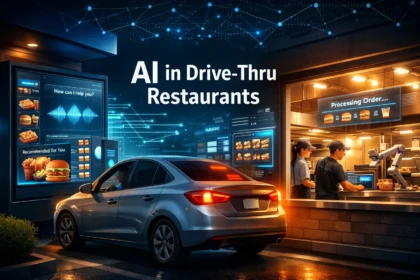
Fast food ai technology has a wide range of applications, from customer-facing interfaces to back-end operations. One of the most significant applications is in the area of customer service. Ai-powered chatbots and virtual assistants are being used to take orders, answer customer queries, and even provide personalized recommendations. For example, a customer can use a mobile app to place an order, and the ai-powered system will suggest additional items based on their previous purchases.
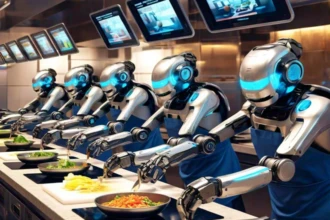
Another significant application of fast food ai technology is in the area of kitchen automation. Ai-powered systems can analyze recipes, optimize cooking times, and even detect when food is cooked to perfection. This not only improves the quality of the food but also reduces waste and increases efficiency. Additionally, ai-powered robots can be used to perform tasks such as food preparation, packaging, and cleaning, freeing up human staff to focus on more complex tasks.
Benefits of Fast Food Ai Technology
There are several benefits to adopting fast food ai technology, including increased efficiency, improved customer experience, and reduced labor costs. Ai-powered systems can process orders quickly and accurately, reducing wait times and improving customer satisfaction. Additionally, ai-powered analytics can help restaurants optimize their menu offerings, reducing waste and increasing profitability.
- Increased efficiency: Ai-powered systems can automate tasks, reducing the need for human labor and improving productivity.
- Improved customer experience: Ai-powered chatbots and virtual assistants can provide personalized recommendations, improving customer satisfaction and loyalty.
- Reduced labor costs: Ai-powered systems can perform tasks such as food preparation, packaging, and cleaning, reducing the need for human labor.
Current State of the Industry
The fast food ai technology industry is rapidly evolving, with new advancements and innovations emerging every day. One of the most significant trends in the industry is the adoption of cloud-based ai solutions. These solutions allow restaurants to access ai-powered analytics and automation tools without the need for significant upfront investment. Additionally, cloud-based solutions can be easily scaled up or down to meet changing demand, making them ideal for restaurants with fluctuating customer traffic.
Another significant trend in the industry is the use of machine learning algorithms to improve customer experience. Machine learning algorithms can analyze customer data, preferences, and behavior, providing personalized recommendations and improving customer satisfaction. For instance, a fast food chain can use machine learning algorithms to analyze customer purchase history, and recommend items that are likely to be of interest to them.
Challenges and Limitations
While fast food ai technology has the potential to revolutionize the industry, there are also several challenges and limitations to its adoption. One of the most significant challenges is the high upfront cost of implementing ai-powered systems. Additionally, there is a need for significant training and support to ensure that staff are able to effectively use and maintain ai-powered systems.
- High upfront cost: Implementing ai-powered systems can require significant investment in hardware, software, and training.
- Lack of standardization: There is currently a lack of standardization in the fast food ai technology industry, making it difficult for restaurants to compare and evaluate different solutions.
- Dependence on data quality: Ai-powered systems rely on high-quality data to function effectively, which can be a challenge for restaurants with limited data analytics capabilities.
Despite these challenges, the adoption of fast food ai technology is expected to continue growing in the coming years. As the technology becomes more advanced and affordable, we can expect to see more restaurants adopting ai-powered solutions to improve efficiency, customer experience, and profitability. Additionally, the use of fast food ai technology is expected to expand beyond the fast food industry, with applications in other sectors such as retail, healthcare, and finance.
In conclusion, fast food ai technology is a rapidly evolving field that has the potential to revolutionize the way restaurants operate. From customer-facing interfaces to back-end operations, ai-powered systems can improve efficiency, customer experience, and profitability. While there are challenges and limitations to its adoption, the benefits of fast food ai technology make it an exciting and promising development for the industry.